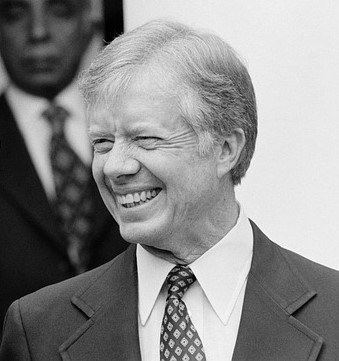
The extraordinary life of Jimmy Carter, 39th President of the United States who passed away on Sunday, December 29th , 2024, is a rebuke to the idea that personal morals and religiosity cannot survive the harsh realities of politics. Though perhaps most remembered for his single term as president from 1977 to 1981, Carter’s commitment to principle and life of selfless service to his fellow man neither began nor ended with his time in the White House.
Born in 1924 in Plains, Georgia, Carter’s mother was a nurse and his father was a peanut farmer—and a segregationist. In spite of his upbringing, however, Carter’s devout Baptist faith led him to become an outspoken advocate for civil rights. After serving seven years as a submarine officer in the US Navy, he entered politics at the local level, and by 1970 had risen to become governor of Georgia, in which capacity he championed the cause of racial equality in the face of protests outside the state capital by the Ku Klux Klan.
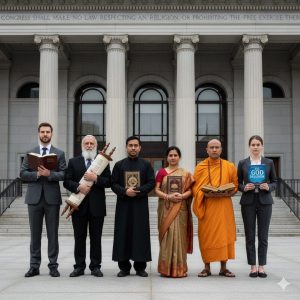
As President, Carter was a staunch advocate for separation of church and state, voicing agreement with the 1962 and 1963 Supreme Court ruling against mandatory prayer in public schools and opposing what he described in terms of adultery the burgeoning alliance between evangelical Christianity and the political right. To Carter, religious faith was a matter between a man and his God; and in terms of his own faith, he practiced exactly what he preached. He devoted his term as president to advancing humanitarian issues, and was pleased that not a single US servicemember died in combat during his time in office.
Carter continued to give of himself long after leaving the White House, volunteering with Habitat for Humanity until 2018 and teaching Sunday School until 2019. His active and compassionate lifestyle no doubt contributed to his remarkable longevity; at 100 years of age, he is the longest-lived president to ever occupy the office.