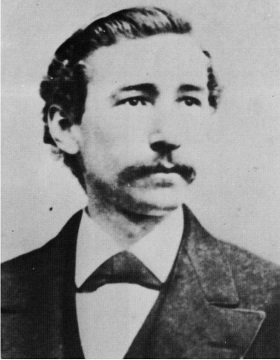
Alonzo T. Jones (1850–1923) was a prominent American religious leader, historian, and advocate for religious freedom during a time of significant tension between church and state. As an influential figure within the Seventh-day Adventist Church, Jones was deeply engaged in the defense of individual conscience and the separation of church and state. His writings, particularly in The American Sentinel, emphasized the dangers of church and state union and the need for liberty of conscience and belief. His critiques of the intertwining of religion and government showcased the need to protect the sanctity of personal faith against coercive authority.
Jones made a bold assertion in the American Sentinel, Volume 3, Number 2, February 1, 1888 that,
“We would rather be classed with infidels in opposition to the tyranny of a religious despotism, than to be found on the side of those who call themselves Christians while promoting it.”
It was a defiant statement from a Christian minister that shocked the professors of religion of his day, and shed light on a profound ethical dilemma. It challenged the ideas of the religious establishment of his time and presented a question: who truly embodied the teachings of Christianity? By positioning himself against those who misuse Christian labels to justify tyranny, Jones called for a re-examination of what true religious liberty meant.
Jones’ sharp assertion resounds deeply with biblical principles, particularly the Golden Rule, which is articulated in Matthew 7:12: “So whatever you wish that others would do to you, do also to them.” This principle emphasizes the ethical and moral imperative to treat others with respect and kindness. When religious authority is wielded as a tool of oppression, it stands in stark contradiction to this commandment. Furthermore, the Bible contains numerous admonitions against oppression and the misuse of power, such as found in the Book of Isaiah chapter 58.
In Isaiah 58, God confronts the people of Israel with a sharp rebuke, exposing the hypocrisy of their outward religious observances. Though they fast, pray, and appear devout, their actions reveal a deep disconnect between their presumptive words and true righteousness. God was displeased with their hollow displays of piety, for while they perform religious duties and claimed to follow God, they oppressed their workers, exploited the vulnerable, and ignored the cries of the needy. God made it clear that true worship cannot exist alongside injustice; He despises the self-righteousness that masks cruelty and selfishness. God’s call in Isaiah 58 is not for empty rituals or self-righteous claims but for a transformative faith that breaks chains of oppression, frees the downtrodden, and seeks justice and compassion. He demands a faith that reaches beyond personal piety to address systemic injustice—a faith that expresses itself through mercy, humility, and love for others. The Lord’s message is that those who oppress while claiming holiness are far from Him, for genuine righteousness aligns with His heart for the marginalized and reflects His character of justice and compassion. One area where Christianity has sorely been lacking has been in its treatment of unbelievers.
The sentiments expressed by Jones also resonated with the writings of the American Founding Fathers, who emphasized the importance of individual liberties and the separation of church and state. Thomas Jefferson famously stated, “No man shall be compelled to frequent or support any religious worship, place, or ministry whatsoever” (Virgina Statute for Religious Freedom, adopted 1786). This statement reflected a foundational belief in the right to personal conscience and the rejection of state-sponsored religion. Similarly, James Madison asserted, “Religion and government will both exist in greater purity, the less they are mixed together” (James Madison to Edward Livingston, 1822). These statements reinforce the idea that true religious expression flourishes in an environment free from coercion and where church and state are separated.
This is not to say individuals working in government cannot have their individual religious convictions. But it is to say that they have no constitutional ability to legislate their religious convictions as binding on others. Jones understood this well, and Seventh-day Adventists down through the decades have followed this principle of defending the religious convictions of all, including those religious beliefs they do not agree with.
In contemporary discourse, the rise of Christian nationalism has posed a significant threat to the principles that both Jones and the Founding Fathers championed. Christian nationalism seeks to amalgamate faith with national identity, often at the expense of religious pluralism and the convictions of those who hold different beliefs. This movement can lead to the marginalization of minority Christian and non-Christian communities and undermine the very freedoms that define American democracy.
The most unbiblical and un-American pursuit is, therefore, the embrace of Christian nationalism, which contradicts the essence of the Golden Rule, the words of Jesus Himself that His kingdom is “not of this world”, and the foundational principles of liberty espoused by the Founding Fathers of America. By prioritizing a singular interpretation of faith within the public sphere, proponents of Christian nationalism risk engendering division rather than unity, coercion rather than freedom.
To conclude, Alonzo T. Jones’ above statement on siding with “infidels” against religious tyranny serves as a critical reminder of the need for vigilance in protecting individual conscience and the separation of church and state. Grounded firmly in biblical principles and illuminated by the wisdom of the Founding Fathers, his stance against the misuse of Christianity and abuse of political power resounds today as a call for tolerance, respect, and true freedom of belief. In a diverse society, the pursuit of religious liberty must remain paramount, guarding against any form of tyranny—whether religious or political—that threatens the ethical fabric of our nation…and the Body of Christ.